The Cave of Saint John
Back to all places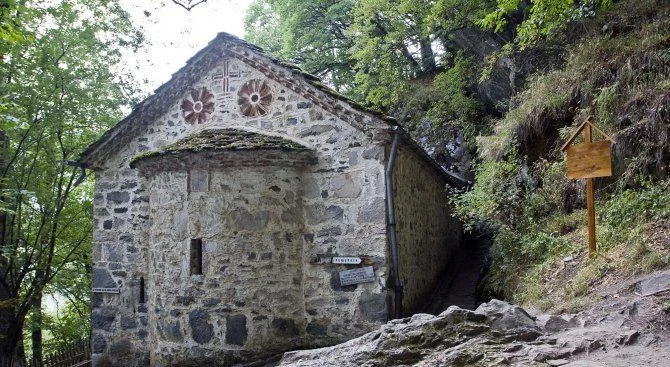
A short walk above today’s Rila Monastery leads to the cave where St. Ivan Rilski lived as a hermit in the 10th century. Around this simple rock shelter, his first disciples formed the earliest cliff monastery, a small complex of wooden huts and prayer niches built directly into the steep rocks. This was the original heart of the Rila monastic tradition, long before the large monastery in the valley appeared.
Next to the cave stands a small medieval church, built to mark the place where the first monastic community gathered. The current structure dates mostly from later centuries, but it preserves the memory and footprint of the earliest sacred site. Its modest size and solitary setting echo the simplicity of the first Rila hermits.
Beside the church is the grave where the saint was initially buried after his death. His relics were later moved several times and eventually enshrined at the main monastery below, but the original tomb remains a significant pilgrimage point. Many visitors still pause here to leave a prayer or simply reflect in the quiet surroundings.
The place also keeps some rituals still alive. One of them is passing through the rock opening: Inside the cave, a narrow gap leads to the outside. According to local belief, passing through it “tests” a person’s purity of heart and frees them from burdens or fear. Another is to leave small tokens or written wishes: Pilgrims sometimes leave threads, ribbons, or handwritten prayers near the grave or the cave walls, continuing centuries-old practices of seeking the saint’s intercession. If you look closely at the cracks in the rocks, you might see some of them.
This small, rugged complex above the monastery remains one of the most atmospheric places in Rila, where the peaceful forest, the cave, and the old church still preserve the spirit of the first monastic community that formed around Bulgaria’s most revered hermit.
42.15004, 23.36986